TriCoSphere: A High-Dexterity, Large-Volume, 3-Finger Coaxial Spherical Manipulator

1School of Information Science and Technology, ShanghaiTech University 2Shanghai Fourier Intelligence Co., Ltd.
*Co-second authors  |  †Corresponding author
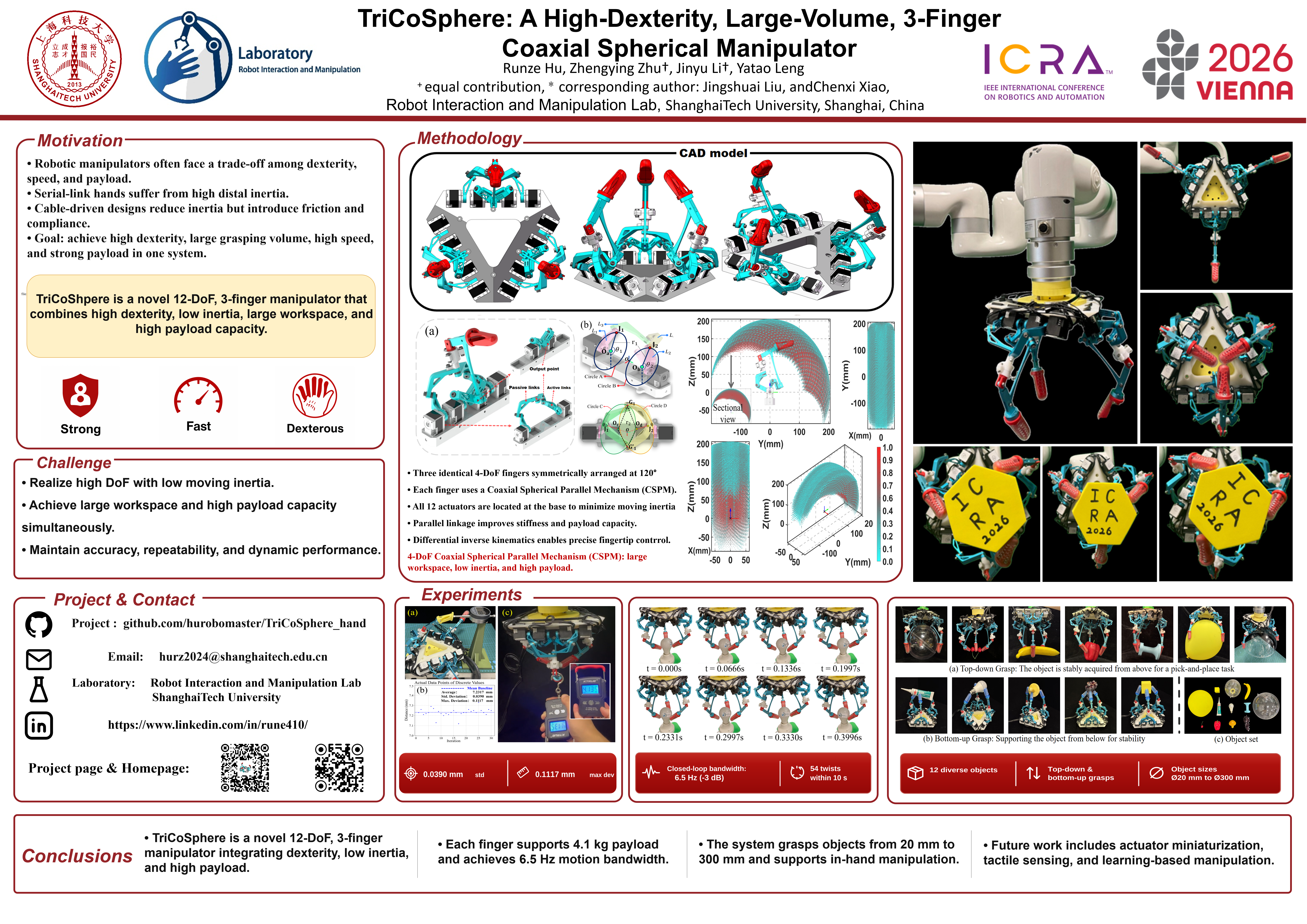
TriCoSphere Manipulator.
12 DoF
Three 4-DoF parallel-kinematic fingers
4.1 kg / finger
Static payload capacity per finger
6.5 Hz
Closed-loop motion bandwidth
20 mm – 300 mm
Grasp range across diverse objects
TriCoSphere Overview.

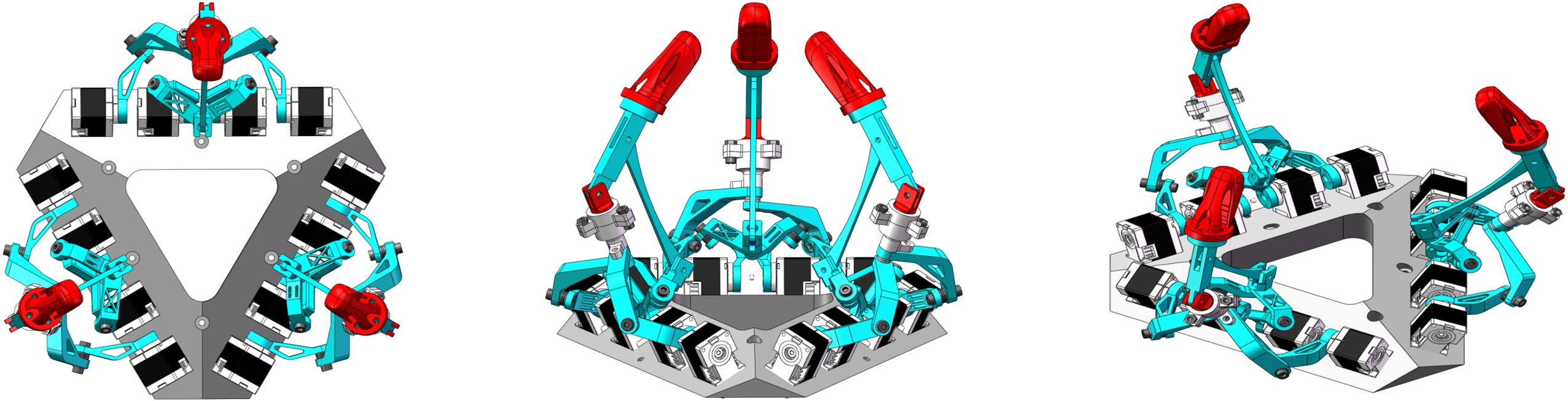
Fig. 1: Overview of the TriCoSphere Manipulator. Three identical 4-DoF fingers symmetrically arranged around a central palm. All 12 actuators are located at the base, minimizing finger inertia.

TriCoSphere Poster.

Motion Demos

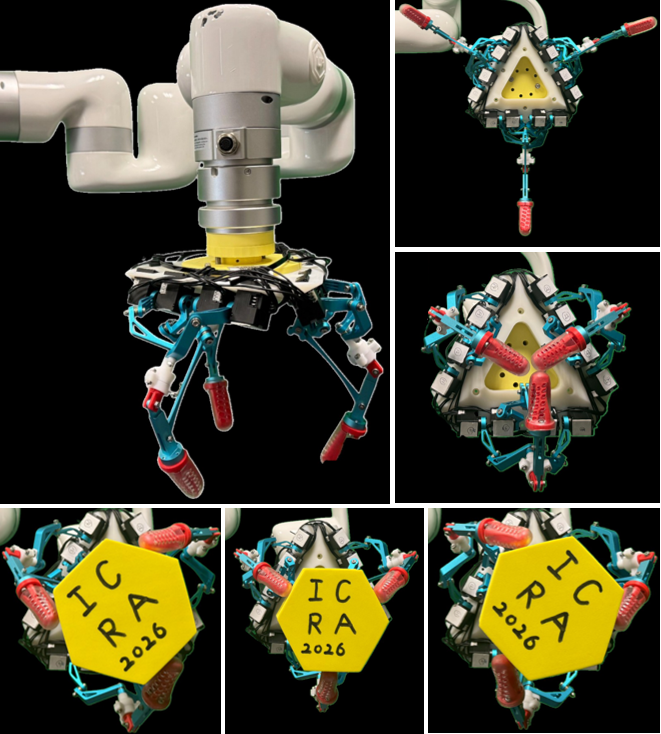
Basic Open/Close Motion
Rotation Motion
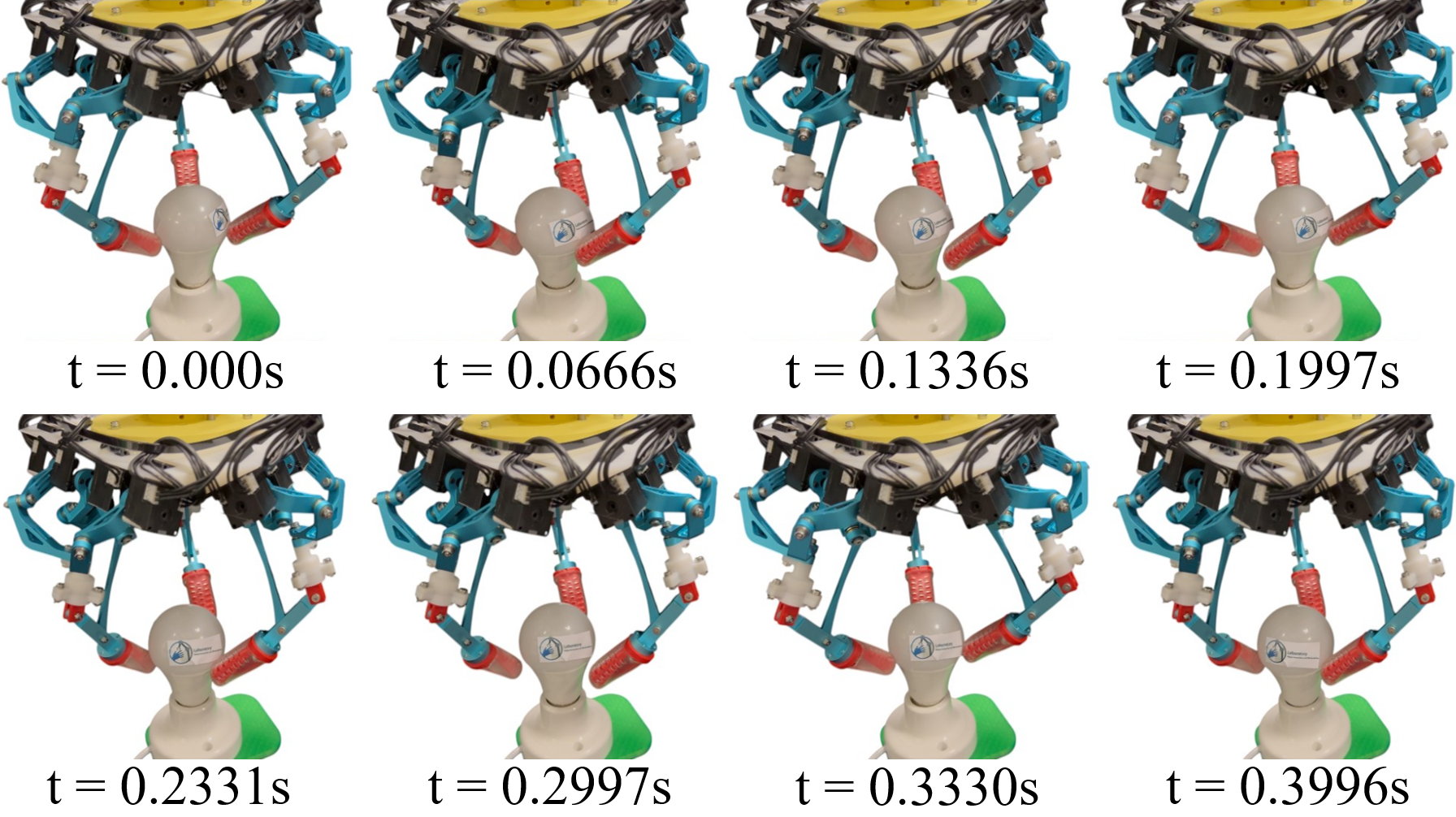
In-hand Lightbulb Manipulation
ICRA Demo Rotation

Abstract

Designing robotic manipulators often requires balancing dexterity, speed, and payload capacity. While traditional serial-link and cable-driven manipulators offer high dexterity, they struggle to concurrently achieve high speed, and often lack the strength and stiffness required for many applications.

To address these limitations, we present TriCoSphere, a novel 12-degree-of-freedom, three-fingered manipulator designed to optimize all three attributes. Each 4-DoF finger employs a Coaxial Spherical Parallel Mechanism (CSPM), which positions all actuators at the base. This parallel architecture minimizes finger inertia for high-speed motion and distributes loads across multiple linkages, enhancing payload capacity. We provide a complete kinematic analysis and develop an efficient inverse kinematics solver for precise fingertip control.

Experiments demonstrate that each finger can support a 4.1 kg payload and achieve a motion bandwidth of 6.5 Hz. The manipulator's grasp range and dexterity are showcased by handling objects from a 20 mm sphere to a 300 mm acrylic ball, as well as performing complex in-hand manipulation tasks. TriCoSphere is cost-effective, robust, and open-sourced to support future research.
Methodology

A. Overview of Manipulator Design

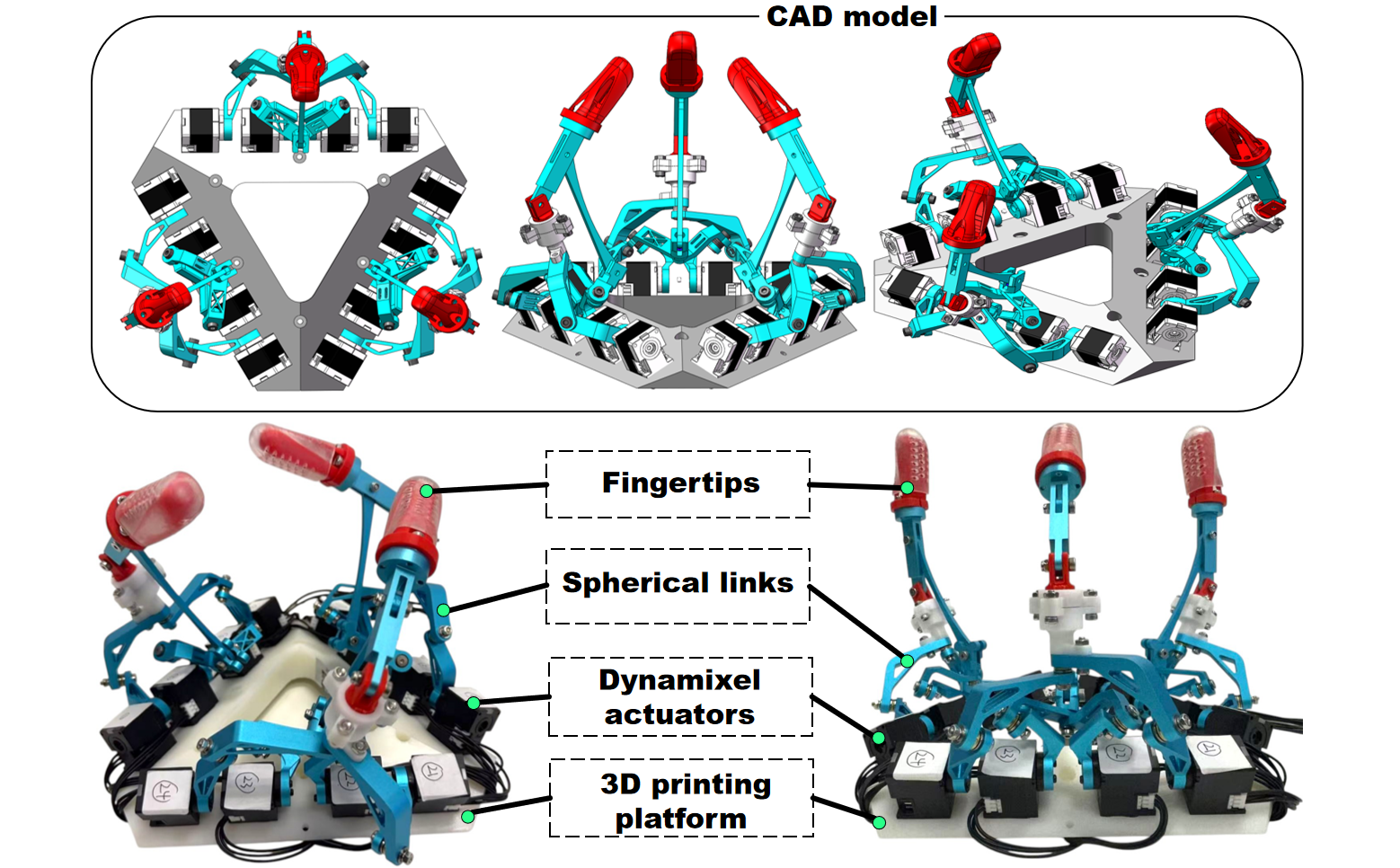
The TriCoSphere manipulator comprises three identical robotic fingers symmetrically mounted around a circular base at 120° intervals. Each finger is a 4-DoF Coaxial Spherical Parallel Mechanism (CSPM) with all joint actuators coaxially aligned at the base. This configuration offers two key advantages. First, apart from the base-mounted motors, each finger consists solely of passive linkages, resulting in a lightweight structure with minimal moving mass and reduced inertia, thus enabling fast, responsive fingertip motion. Second, the parallel linkage distributes the load across multiple actuators, improving payload capacity compared to traditional serial mechanisms.

Manipulator Design Overview.

Fig. 2: Design overview of TriCoSphere showing the three-finger layout and the base-mounted actuation system.

B. Finger Kinematics

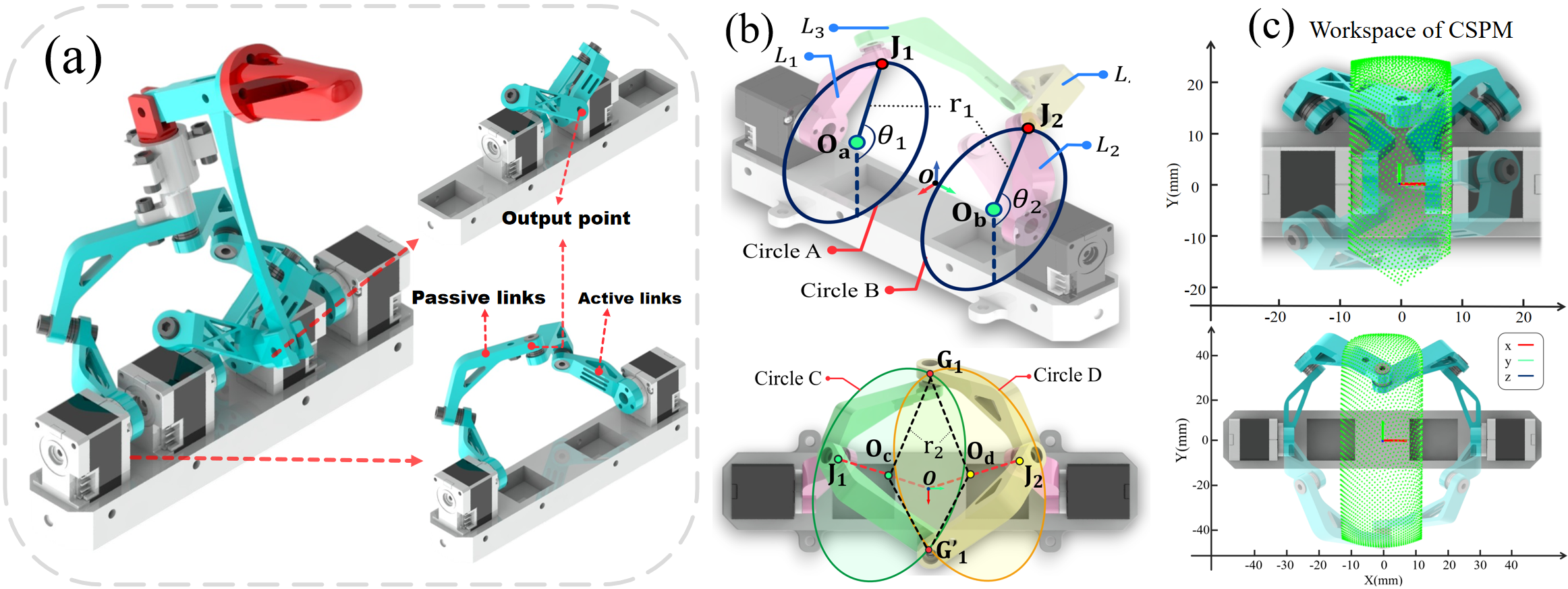
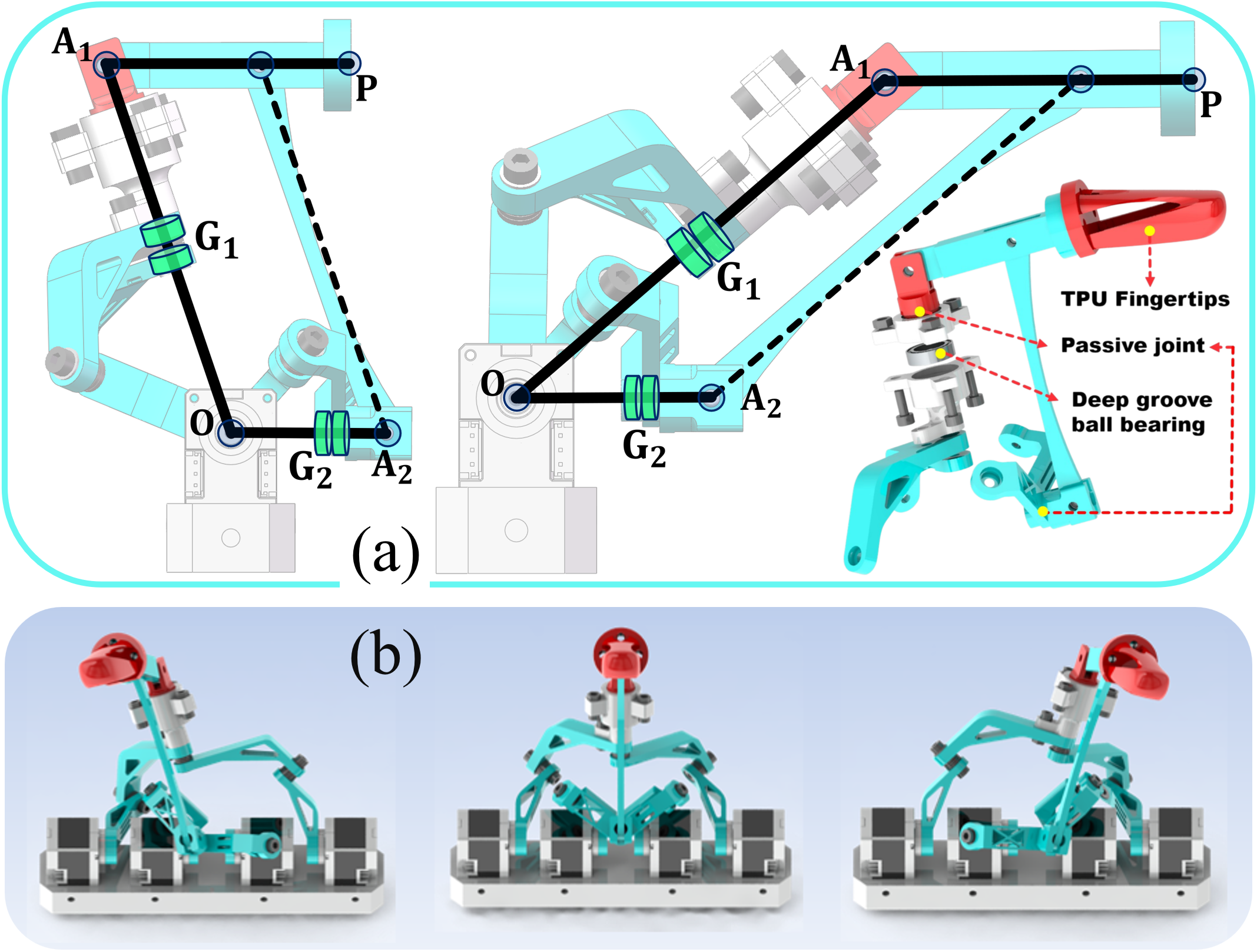
Each finger mechanism has four degrees of freedom. The mechanism consists of two 2-DoF Coaxial Spherical Parallel Mechanisms (CSPMs), which together form the proximal phalanx, and a spatial five-bar linkage fingertip that is jointly actuated by the aforementioned CSPMs. The overall kinematic chain is determined by the coupled motion of these two components.

Single finger mechanical structure.

Fig. 3: Illustration of the single finger's mechanical structure based on CSPM. (a) Overall structure; (b) Joint trajectories; (c) Motion ranges.

2-DoF CSPM Mechanism

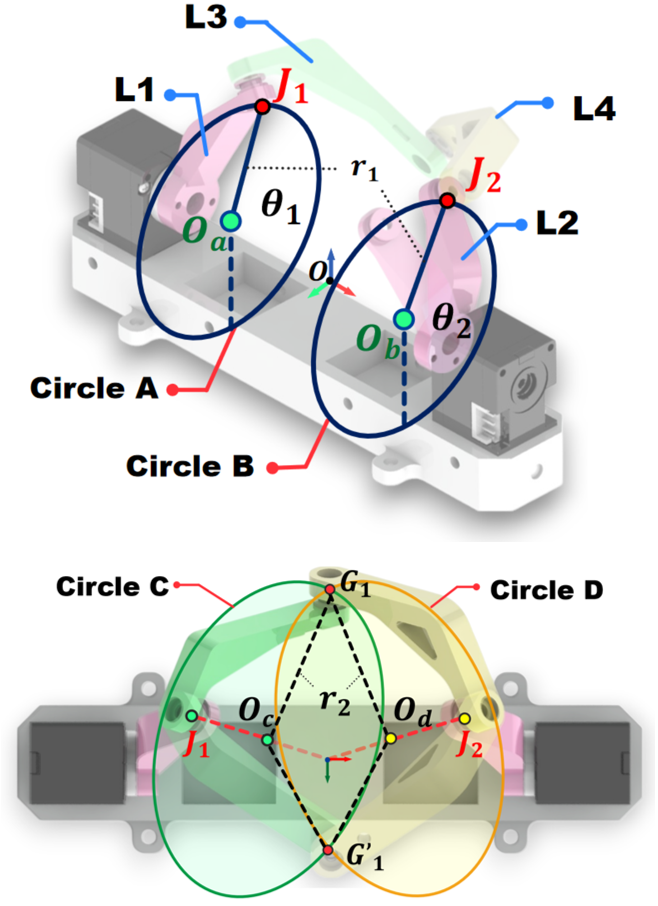
The CSPM is a 2-DoF spatial five-bar linkage whose end-effector moves along a virtual spherical surface. The joint positions are determined by kinematic equations involving the active joint angles q1 and q2, with spherical centers Oa and Ob.

2-DoF CSPM.

Five-bar Linkage Fingertip

The fingertip is formed by a spatial five-bar linkage that is jointly actuated by the two CSPM mechanisms. This design provides a compact yet highly dexterous end-effector with a large workspace volume.

Five-bar linkage.
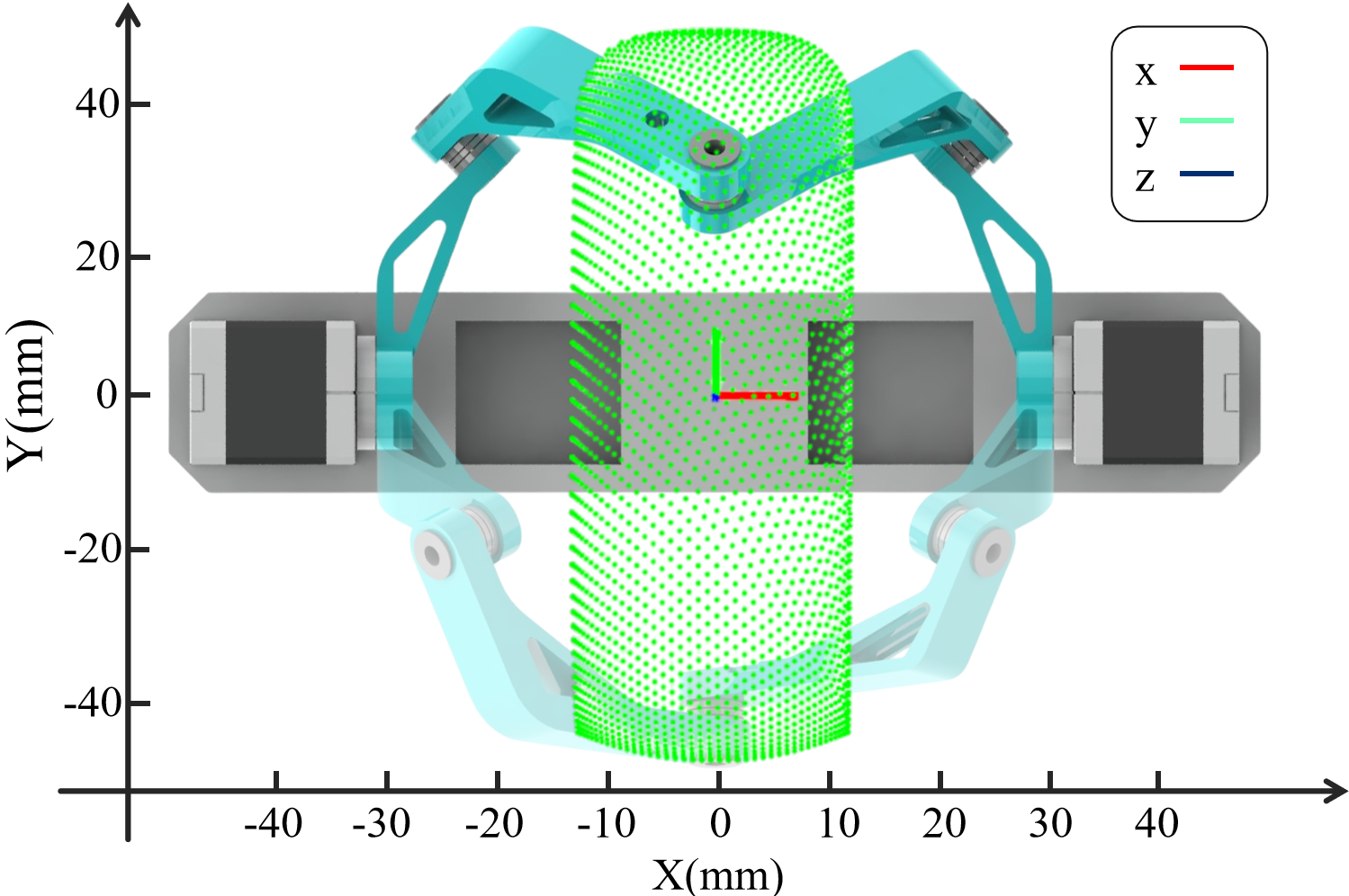
CSPM Motion Range.

Fig. 4: Motion range analysis of the CSPM mechanism, showing the angular workspace envelope.

Workspace and Manipulability

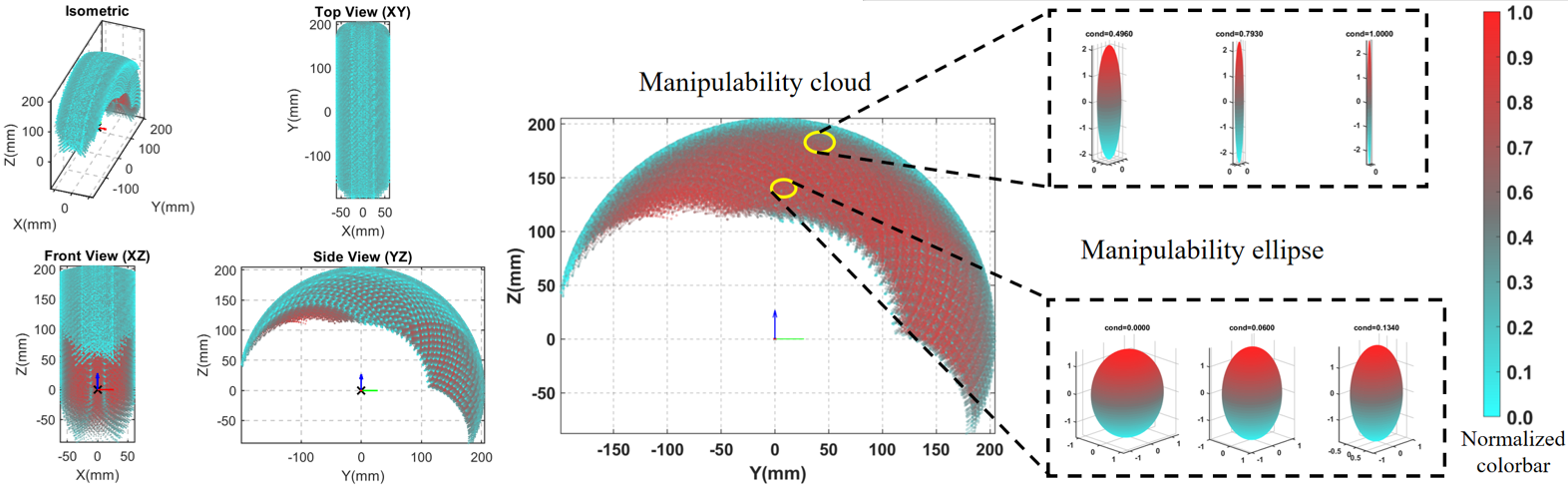
The workspace of an individual TriCoSphere finger is shown in Fig. 5. Each finger achieves a large spherical workspace volume with high manipulability throughout the operating range, enabling versatile grasping orientations and complex in-hand manipulation tasks.

Workspace and manipulability.

Fig. 5: Workspace and manipulability of a single finger, with manipulability color gradient from blue (low) to red (high).

Experiments

A. Experimental Setup

The TriCoSphere prototype was fabricated primarily using 3D-printed PLA components and off-the-shelf servo motors. The control system runs on a real-time platform with a customized inverse kinematics solver operating at 100 Hz. The experimental setup includes a motion capture system for ground-truth measurement, a force/torque sensor for payload characterization, and a dial gauge for repeatability testing.

B. Motion Speed and Bandwidth

The dynamic responsiveness of each finger was evaluated through frequency response analysis by commanding a sinusoidal trajectory and recording both the input and resulting positions. The system exhibited a closed-loop position-control bandwidth of 6.5 Hz (-3 dB), made possible by the low-inertia design with base-mounted actuators.

C. Payload and Repeatability

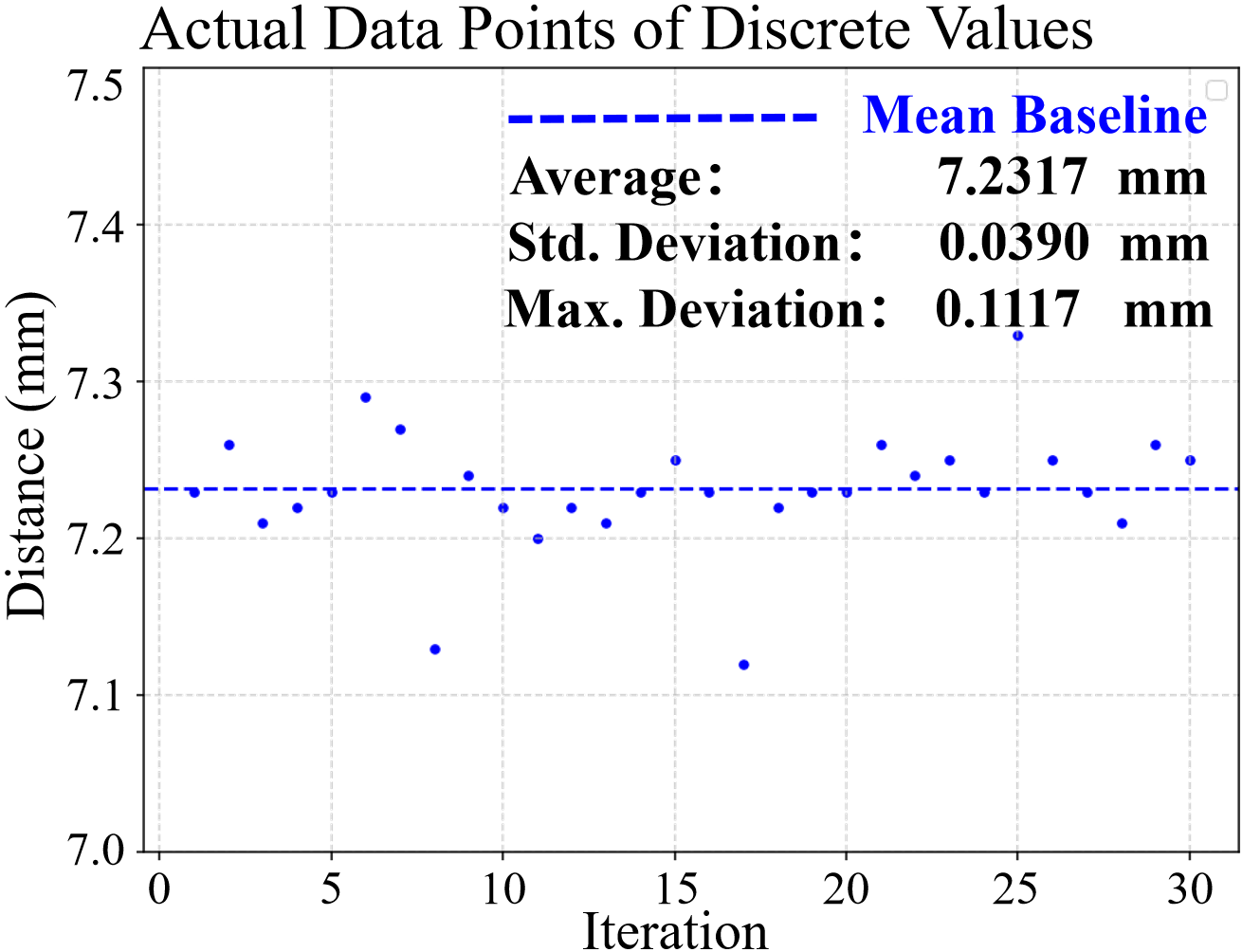
The manipulator demonstrated a payload capacity of 4.1 kg per finger. Repeatability testing over 30 cycles confirmed consistent positioning accuracy, and the payload test verified the structural robustness of the parallel kinematic design.

Payload Test (4.1 kg / finger)
Repeatability Test (30 cycles)
Repeatability test results.

Fig. 7a: Distribution of repeatability test data across 30 cycles, demonstrating consistent positioning accuracy.

D. Grasping and Dexterity Evaluation

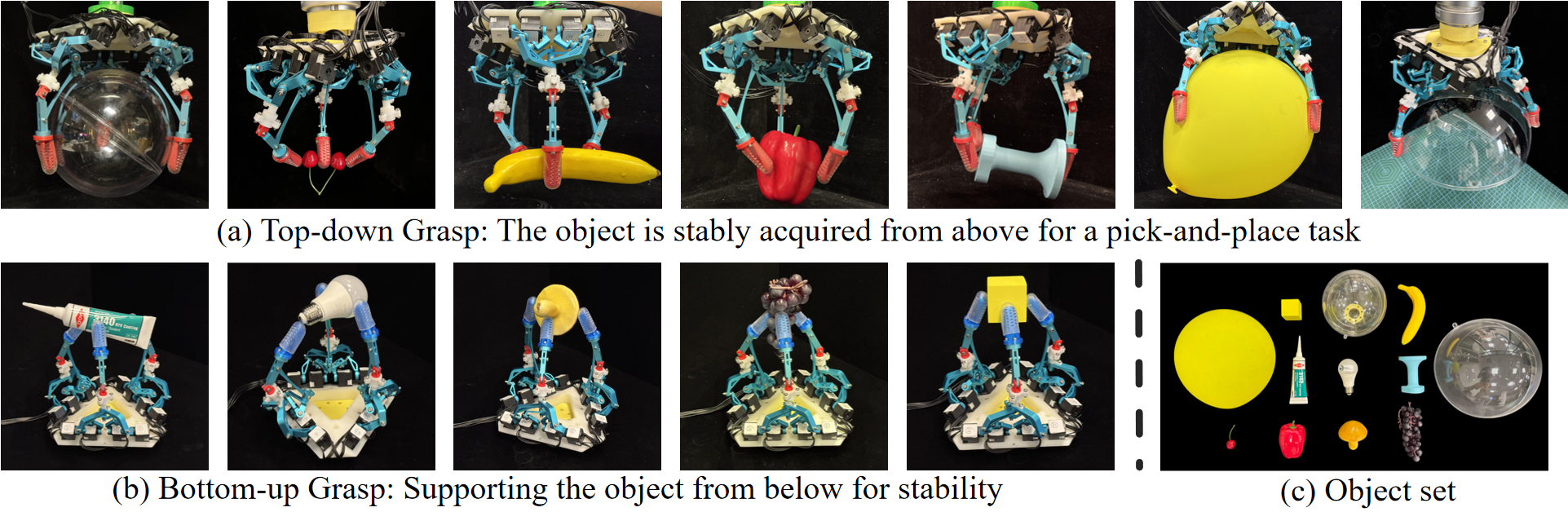
The TriCoSphere's versatile grasping capabilities were demonstrated through successful grasping of 12 distinct objects, with sizes spanning from 20 mm to 300 mm. The object set includes rigid, fragile, and deformable items: 200 mm acrylic sphere, cherry, banana, red bell pepper, irregularly-shaped 3D-printed part, big balloon, 300 mm acrylic hemisphere, glue bottle, lightbulb, mushroom, grapes, and small yellow cube.

Versatile grasping capabilities.

Fig. 6: Grasping 12 distinct objects from 20 mm to 300 mm. (a) Top-down; (b) Bottom-up grasps; (c) Diverse object set.

Lightbulb grasping.

Fig. 7b: Close-up of lightbulb grasping, demonstrating precise handling of fragile and irregularly-shaped objects.

Conclusion

In this paper, we introduced the TriCoSphere, a novel 12-DoF, 3-fingered robotic manipulator. The core of our design is the Coaxial Spherical Parallel Mechanism (CSPM) for each finger, which places all actuators at the base to achieve low inertia, high speed, and excellent load distribution. Furthermore, we developed its forward kinematic model and an efficient differential inverse kinematics solver to enable positional control of the fingertip.

Through comprehensive experiments and validations, we showcased the key advantages of the TriCoSphere. The manipulator demonstrated a payload capacity of 4.1 kg per finger, a high motion bandwidth of 6.5 Hz. Furthermore, its dexterity was confirmed through diverse manipulation tasks, including grasping objects from 20 mm to 300 mm and performing in-hand manipulation tasks such as pivoting objects and unscrewing a bottle cap or lightbulb.

BibTeX

@inproceedings{hu2026tricosphere,
  author    = {Hu, Runze and Zhu, Zhengying and Li, Jinyu and Leng, Yatao and Liu, Jingshuai and Xiao, Chenxi},
  title     = {TriCoSphere: A High-Dexterity, Large-Volume, 3-Finger Coaxial Spherical Manipulator},
  booktitle = {Proceedings of the IEEE International Conference on Robotics and Automation (ICRA)},
  year      = {2026},
}